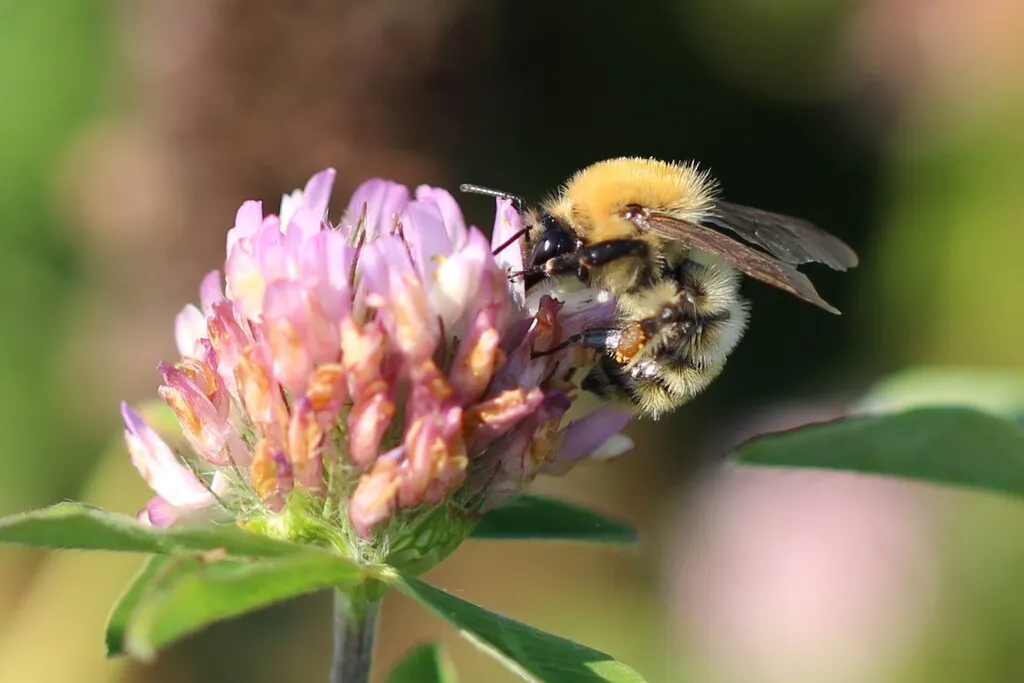
Endangered Moss carder bee found at our Wet sedge meadow project
Just one year after restoring a wet sedge meadow by flooding a formerly unproductive field in 2024, the site began providing important habitat for wildlife.
Monitoring carried out by entomologist Marek Semelbauer before and after the restoration recorded the Moss carder bee (Bombus muscorum), a rare species associated with marshes and wet meadows. Two individuals were found during surveys at the site.
The Moss carder bee is listed as Endangered in Slovakia and Critically Endangered in Hungary and the Czech Republic. It builds nests on or just below the ground, using moss and dry grass to cover them - the behaviour that gives the species its name.
We are thrilled with this recording and hope the population will increase as conditions at the meadow continue to improve. Other species of conservation interest recorded included the Southern Festoon (Zerynthia polyxena), the Knapweed Fritillary (Melitaea phoebe), the mallow long-horned bee (Tetralonia malvae), and the hoverflies Merodon ruficornis and Microdon devius.
The surveys also showed that pollinator abundance in the restored meadow was two to three times higher than in an adjacent agricultural field, highlighting the rapid biodiversity benefits of wetland restoration.