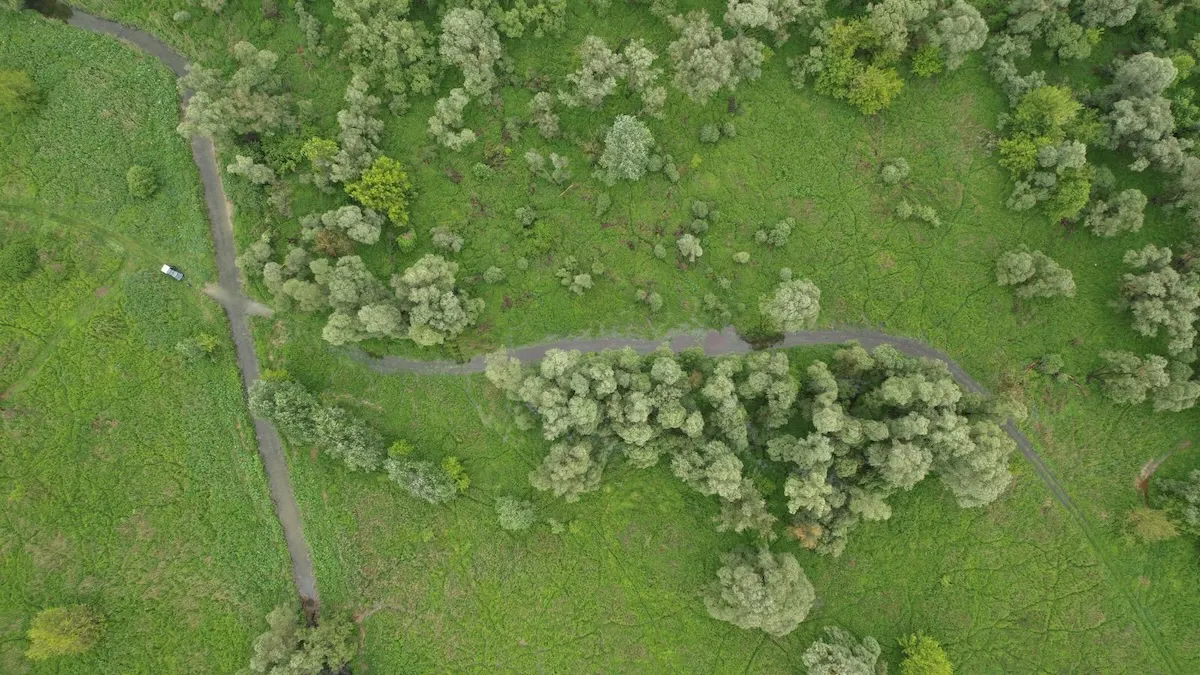
Recent monitoring shows encouraging progress in our restoration area. Invasive plant species are retreating, while native wetland plants are expanding in these rare habitats.
More Than a Forest
Our Flooded Forest restoration area is not only forest. It also includes wet sedge meadows—an important habitat for the Pannonian root vole, a small endemic mammal. This species is considered an umbrella species, meaning that protecting its habitat also protects many other species that depend on the same conditions.
The Pannonian root vole lives almost exclusively in wet meadows dominated by tall sedges such as Carex riparia, which form a key part of its diet. Healthy sedge meadows require constant soil moisture or shallow groundwater and minimal disturbance or drainage. When these conditions disappear, the vole—and many other wetland species—disappear as well.
A Rare Habitat
Before the Danube River was regulated and large areas of the Pannonian Plain were drained, wet sedge meadows were common across the Danube lowlands. Today they are increasingly rare.
Even within the Danube floodplains, the waterlogged conditions needed for sedges often no longer occur. When these wetlands dry out, native plant communities are quickly replaced by non-native invasive species.
Restoration in Action
The positive news is that when water returns, native wetland species can recover quickly.
This recovery is already visible in our Flooded Forest restoration project. Efforts to control invasive plants—particularly Solidago gigantea and Symphyotrichum lanceolatum (formerly Aster lanceolatus agg.)—began in 2020. Our partner organisation BROZ started by cutting and mulching the invasive plants. In 2022, water was reintroduced to the area as part of the restoration project.
Since then, BROZ has continued annual mowing and mulching to support the return of native species such as Chaerophyllum bulbosum, Galium aparine, Humulus lupulus, and Carex riparia.
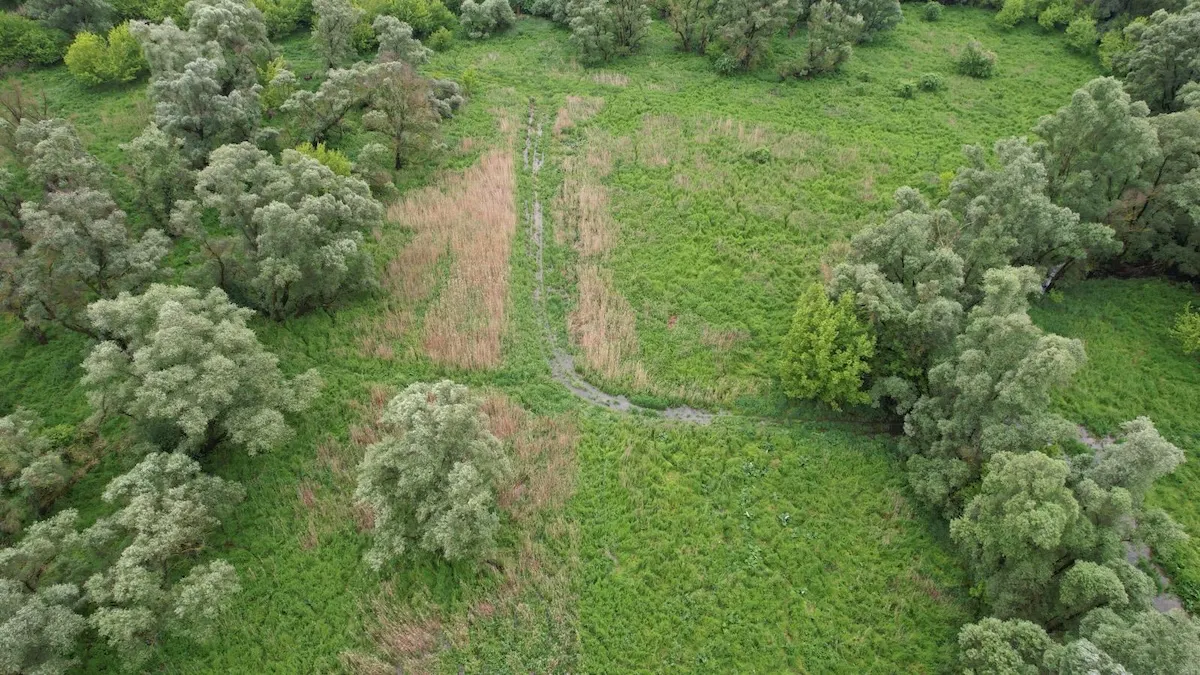
What Monitoring Shows
At the start of the project, four monitoring plots were established to track changes in the plant community.
The results show clear improvement:
- In one plot, invasive species covered nearly 100% of the area in 2020. By 2025, their cover had dropped to 20%, while Chaerophyllum bulbosum expanded to 60% coverage.
- In the other three plots, Solidago gigantea has strongly declined or nearly disappeared. At the same time, the diversity and coverage of native plants have increased.
However, monitoring also revealed a new challenge. In two plots, the non-native Symphyotrichum lanceolatum has begun to occupy space left after the reduction of Solidago gigantea.
Next Steps
Mulching appears to be an effective short-term method for controlling Solidago gigantea. Its effectiveness against Symphyotrichum lanceolatum, however, remains uncertain.
Based on experience from other sites, livestock grazing may prove to be a more effective long-term strategy for suppressing this species and supporting the recovery of native wetland vegetation. BROZ is currently exploring the feasibility of bringing livestock into the area.